Betraying Abraham
On the story before the knife gleamed

This is how we tend to remember the story of Abraham: Abraham was called upon to make a sacrifice. We know that this was Abraham’s test. Abraham made that sacrifice and went on to prove himself worthy; Worthy of God’s revelation, worthy of being a prophet, worthy of being the Chosen One. However, the error with this story is that it begins with the end.
We know Abraham will reign supreme. We know Abraham will pass his test. We know Abraham will prove worthy of being remembered. Everyones remembers Abraham. But how do we “know” Abraham?
We come to know Abraham in the retrospective. We first know his greatness before we know his fear and trembling. He has already won before we even know him or ever get to know him. We have already betrayed Abarahm. We laud Abraham only because we were told the ending before the beginning, his eventually success, his predetermined prevailing.
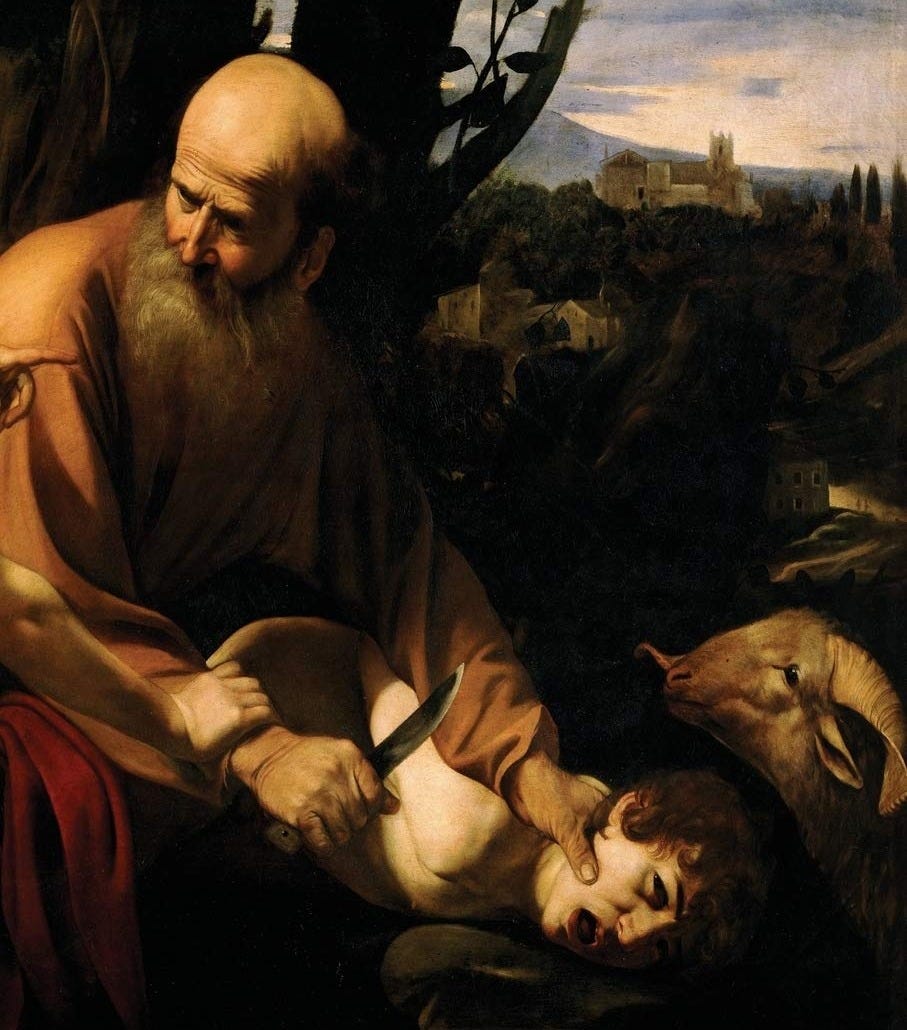
Kierkegaard writes that the narrative of Abraham as the prevailed betrays Abraham more than the logician that tries to engineer the rationality of faith. You cannot reach Abraham via dialectics, he contends. But, you cannot also reach Abraham in the retrospective, from the end.
“It is the outcome that arouses our curiosity, as with the conclusion of a book; one wants nothing of the fear, the distress, the paradox. One flirts with the outcome aesthetically; it comes as unexpectedly and yet as effortlessly as a prize in the lottery; and having heard the outcome one is improved. And yet no robber of temples hard-labouring in chains is so base a criminal as he who plunders the holy in this way, and not even Judas, who sold his master for thirty pieces of silver, is more contemptible than the person who would thus offer greatness for sale.”
There is no leap of faith in the retrospective. There is no leap of faith, no greatness when you are convinced of your chosen-ness, of your trial being a trial. Anyone could sacrifice their son if they were sure it is for a higher purpose. Kierkegaard makes a parallel of Abraham with the virgin Mary and her “trial” and anxiety.
“Was there ever in the world anyone as great as that blessed woman, the mother of God, the Virgin Mary? And yet how do people speak of her? To say she was favoured among women doesn’t make her great, and if it were not for the odd fact that those who listen can think as inhumanly as those who speak, surely every young girl would ask, why am I not favoured too?... What is left out is the distress, the fear, the paradox. No doubt the angel was a ministering spirit, but he was not an obliging one who went round to all the other young girls in Israel and said: ‘Do not despise Mary, something out of the ordinary is happening to her.’ The angel came only to Mary, and no one could understand her.”
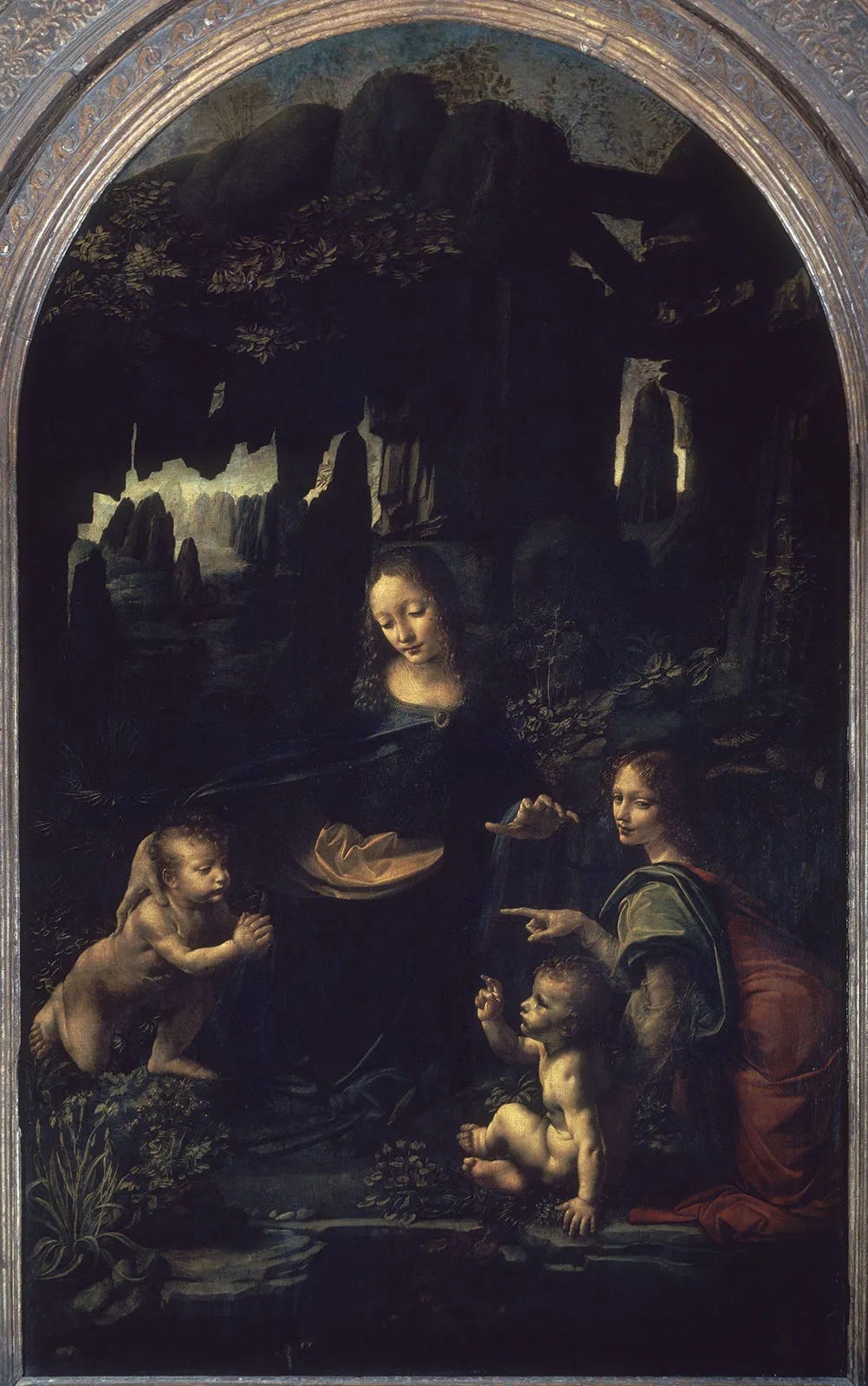
“She needs no worldly admiration, as little as Abraham needs our tears, for she was no heroine and he no hero, but both of them became greater than that, not by any means by being relieved of the distress, the agony, and the paradox, but because of these.”
Every girl wants to be Mary. Everybody claims to understand Abraham even as a father set out to slay his son. Yet noone wants their portion of agony.
You must accompany Abraham in his journey. Abraham’s story is not the sacrifice of his much awaited dear son, it is merely the end of it. So engulfed are we in the climax that we forget Abraham took a journey of 3 days before he reached the mountain where he was meant to sacrifice Ismail. So engulfed are we in the redemption, that we forget that Abraham tried to waive off the recurrent dream as some satanic spell to avoid reckoning with his reality.
Abraham’s story is not the knife on Ismail’s neck but his journey to the mountain. His silence towards his wife, Hajar. And the making up of his mind and coming to accept the reality of what he was meant to do.
Knowing Abraham is not about knowing his victory but knowing his “fear and trembling”.
Let’s trace the journey of a man who was granted a son after many prayers, patience and trials. That in itself was the first “leap of faith” as per Kierkegaard, ie, to believe you can have a son in old age. Once you were granted your desire, it’s as if as per a cruel joke, you were meant to kill him (if we avoid the euphemism “sacrifice” for a moment) with your own hands.
How did Abraham know it was the will of God. Did he genuinely think he was being misled by Satan or was it willful ignorance to shake off what was inevitable. You and I know the outcome. Abraham didn’t. Abraham lived through days of visions, dreams, deliberations with self, doubt, silence, fear and trembling. He had no confidante. We narrate the story generations after generations in a manner of teleportation, robbing Abraham of all his anxiety. We tell Abraham that it was just a trial. Abraham saw, Abraham willed, Abraham did and Abraham prevailed. Clean linear sequence. Nowhere Abraham faltered, shivered, doubted, trembled.
“What is left out of the Abraham story is the anguish; for while I am under no obligation to money, to a son the father has the highest and most sacred of obligations. Yet anguish is a dangerous affair for the squeamish, so people forget it, notwithstanding they want to talk about Abraham”
“There were countless generations that knew the story of Abraham by heart, word for word. How many did it make sleepless?”
He did not know his son will be saved. He was about to kill his son. It is not the replacement of Ismail with the ram that makes Abraham’s story great. It is specifically everything before the replacement that makes Abraham memorable. Kierkegaard asks, “Had Abraham actually sacrificed Isaac, would that have meant he was less justified?”.
We have celebrated Abraham’s victory with him without being a companion in his anguish, without trying to be a witness to his torment. We observe him at the mountain being congratulated on his victory, we never observe him on his journey. How did he face his son on his journey? How many times did he doubt himself, the dreams? What will he tell his wife upon returning? How will he live with himself having slain his son with his own hands? What went on his mind? How many times did he consider returning home? Did he imagine himself carrying out the execution throughout the journey? How did he imagine a life post-Ismail? When was he just a father than a prophet? We have abandoned Abraham at his most defining moment and joined him only at the celebration.
But hold on, could Abraham celebrate his victory? What we imagine is rejoicement and things going back to “normal” as soon as the trial is revealed as such.
Kierkegaard imagines that such a leap of faith is bound to permanently change a regular person.
“From that day on, Abraham became old, he could not forget that God had demanded this of him. Isaac throve as before; but Abraham’s eye was darkened, he saw joy no more.”
However, for Kierkegaard, the trial continued after the cancelled sacrifice. Abraham was meant to return to normalcy. He frames the return of Ismail as itself a second act of faith, harder than the first: this is the marvel, not the sacrifice, but the return to ordinary life afterward. Most people, he argues, could make the sacrifice. Nobody could make the return.
He received Ismail back with joy, really heartfelt joy, that he needed no preparation, no time to adjust himself to finitude and its joy.
It is neither loyalty nor allegiance to Abraham to remember him in his victory, for Abraham is Abraham because of what he did precisely before and after the divinely ordained victory.
“So let us either forget all about Abraham or learn how to be horrified at the monstrous paradox which is the significance of his life.”
For him, the full movement of faith is precisely this double motion: first the infinite resignation, the total surrender, and then the return to the finite, to ordinary life, to Isaac, to dinner, to joy. Without that second movement you have not faith but tragedy.
—-
PS- The story of Abraham is Islam narrates the concerned son to be Ismail. While Christian and Jewish tradition narrate him to be Isaac. Kierkegaard follows Isaac; however, it has been modified by me for this piece to Ismail.
I recently began Fear and Trembling but had to put it aside for other things happened to be on my plate but yeah I do plan to return to it meanwhile your article was so good, loved going through the points, made me revisit the time I first heard the very story, and the point you made about our linear interpretation is haunting.
Wow!